
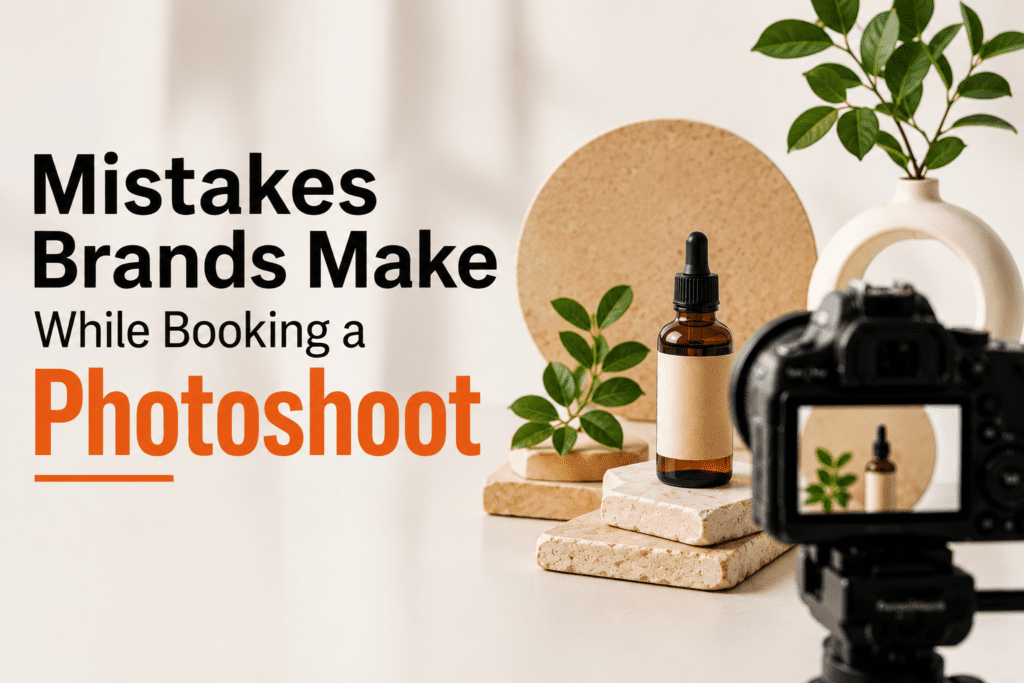
You’ve invested in a photoshoot. You’ve hired a photographer. You’ve received the images.
But your sales didn’t increase.
This is a reality for many D2C brands and eCommerce sellers. The problem isn’t the idea of doing a shoot—it’s the execution. Most brands unknowingly make critical photoshoot mistakes that reduce the impact of their visuals.
Most photoshoots don’t fail because of execution—they fail before the camera even turns on.
And in today’s competitive eCommerce landscape—whether you’re selling on Amazon, Flipkart, or Shopify—your visuals are not just creative assets.
They are your primary sales tool. In fact, nearly 90% of online shoppers rely on visuals before making a purchase decision.
In this blog, we’ll break down the most common product photography mistakes, their real business impact, and how you can avoid them with smarter decisions.
Table of contents
- What Are Photoshoot Mistakes?
- Why Photoshoots Matter More Than Ever in eCommerce
- The 3 Pillars of High-Converting Product Photography
- Top Photoshoot Mistakes Brands Make (Common Product Photography Mistakes)
- 1. Not Defining the Purpose of the Shoot
- 2. Treating Photography as a Cost Instead of an Investment
- 3. Ignoring Brand Identity and Consistency
- 4. No Shot List = No Strategy
- 5. Poor Product Preparation
- 6. Unrealistic Lighting Expectations
- 7. Overcomplicating with Props and Backgrounds
- 8. Ignoring Platform-Specific Guidelines
- 9. Not Capturing Enough Angles and Details
- 10. Skipping Post-Production and Editing
- 11. Not Thinking About Marketing Usage
- 12. Lack of Communication with the Photographer
- Real Business Impact of These Photoshoot Mistakes
- Booking Photoshoot Tips That Actually Work
- Why LensClicker Is the Right Choice for Your Brand
- Conclusion
- Frequently Asked Questions
- 1. What are the most common photoshoot mistakes brands make?
- 2. How do product photography mistakes affect sales?
- 3. Why is lighting so important in product photography?
- 4. What are common ecommerce photoshoot errors brands should avoid?
- 5. How can I avoid mistakes while booking a photoshoot?
- 6. Do professional photos really improve conversion rates?
- 7. What should I prepare before a product photoshoot?
- 8. Why is brand consistency important in product photography?
- 9. How many images should I take for one product?
- 10. Is it worth investing in professional product photography?
What Are Photoshoot Mistakes?
Photoshoot mistakes are errors brands make during planning, execution, or editing of product photography that reduce image effectiveness, lower conversions, and impact brand perception.
Why Photoshoots Matter More Than Ever in eCommerce
Before we dive into mistakes, let’s understand why product photography plays such a critical role in your business success.
1. First Impressions Decide Everything
When a customer lands on your product page, the first thing they notice is your image—not your description.
A high-quality image:
- Instantly builds trust
- Communicates product quality
- Reduces hesitation
A poor image does the opposite.
2. Visuals Directly Influence Conversions
Studies and real-world data consistently show that better images = higher sales.
- Clear images reduce confusion
- Lifestyle shots help customers imagine usage
- Close-ups build confidence in quality
This is why brands investing in strong visuals often outperform competitors.
For example, a D2C skincare brand improved conversions by 32% after replacing low-light images with professionally lit product shots—showing how lighting alone can directly impact buying decisions.
3. Essential for Multi-Platform Selling
Each platform depends heavily on visuals:
- Amazon → Clean, white background images
- Flipkart → Structured, catalog-style images
- Shopify/D2C websites → Branded and storytelling visuals
- Instagram Ads → Eye-catching lifestyle content
Ignoring this can lead to major ecommerce photoshoot errors.
Read more: How to Plan a Successful Ecommerce Photoshoot for Your Brand
The 3 Pillars of High-Converting Product Photography
Before we dive into the common photoshoot mistakes, it’s important to understand what actually makes product images convert.
High-performing product photography is built on three key pillars:
1. Clarity (Easy to Understand)
Your product should be instantly clear. Customers shouldn’t have to guess what you’re selling. Clean composition, proper lighting, and clear angles help remove confusion.
2. Consistency (Strong Brand Identity)
Your images should feel like they belong to the same brand. Consistent lighting, colors, and style build recognition and trust over time.
3. Conversion (Designed to Sell)
Great images don’t just look good—they guide decisions. From hero shots to close-ups, every image should help customers feel confident enough to buy.
If your images are missing even one of these pillars, your conversions are already affected. A quick audit can help identify the gaps.
Top Photoshoot Mistakes Brands Make (Common Product Photography Mistakes)
Let’s break down the most common photography mistakes brands make—and why they hurt your business.
1. Not Defining the Purpose of the Shoot
Many brands jump into a shoot without answering a basic question:
Where will these images be used?
This leads to:
- Amazon images used for Instagram (doesn’t work)
- Lifestyle images used for catalogs (confusing)
- Inconsistent messaging
Why it hurts:
You end up with images that don’t match platform expectations or customer intent.
2. Treating Photography as a Cost Instead of an Investment
Brands often try to save money by hiring the cheapest option.
But cheap shoots often result in:
- Poor lighting
- Low-quality editing
- Lack of direction
Why it hurts:
Bad images reduce perceived product value—customers assume your product is cheap.
This is one of the most damaging product photography mistakes.
3. Ignoring Brand Identity and Consistency
Your visuals should feel like your brand.
But many brands end up with:
- Different styles across products
- Random color tones
- No visual identity
Why it hurts:
Customers don’t remember your brand. You lose long-term trust and recognition.
4. No Shot List = No Strategy
Walking into a shoot without planning is like running ads without targeting.
Common issues:
- Missing key angles
- No hero image
- No lifestyle shots
Why it hurts:
You’ll likely need a reshoot—which means extra cost and time.
5. Poor Product Preparation
Even premium products can look cheap if not prepared properly.
Common mistakes:
- Dust particles visible in close-ups
- Wrinkled clothing
- Scratches or fingerprints
Why it hurts:
Customers notice details. If your product looks flawed, they won’t trust it.
6. Unrealistic Lighting Expectations
Lighting is everything in photography.
Professional photographers prioritize lighting consistency over styling because it directly impacts product accuracy.
But brands often:
- Don’t understand lighting styles
- Expect “Pinterest-style” results without the setup
- Ignore how lighting affects color accuracy
Why it hurts:
Incorrect lighting can:
- Distort product color
- Hide important details
- Reduce overall appeal
7. Overcomplicating with Props and Backgrounds
Props are useful—but only when used correctly.
Common issues:
- Too many elements
- Distracting backgrounds
- Props that don’t match the product
Why it hurts:
Customers get confused about what you’re selling.
Clarity always wins in eCommerce.
8. Ignoring Platform-Specific Guidelines
Each platform has strict requirements.
Examples:
- Amazon requires white backgrounds
- Some categories require multiple angles
- Image size and format matter
Why it hurts:
- Listings may get rejected
- Images may not rank well
- Conversion rates drop
This is one of the most common ecommerce photoshoot errors.
9. Not Capturing Enough Angles and Details
Customers can’t physically touch your product.
So they rely on:
- Close-ups
- Texture shots
- Functional angles
Why it hurts:
Lack of detail leads to hesitation—and hesitation kills sales.
10. Skipping Post-Production and Editing
Photography doesn’t end after the shoot.
Editing is where images become sellable.
Without editing:
- Colors may look off
- Backgrounds may not be clean
- Images may lack sharpness
Why it hurts:
Unedited images look unprofessional and reduce trust.
11. Not Thinking About Marketing Usage
Many brands only think about product pages.
But what about:
- Ads creatives?
- Social media?
- Website banners?
Why it hurts:
You’ll need additional shoots later—wasting time and budget.
12. Lack of Communication with the Photographer
If you don’t clearly communicate:
- Your expectations
- Your brand style
- Your goals
You won’t get the desired output.
Why it hurts:
Misalignment leads to disappointing results—even with a good photographer.
Not sure if your product images are costing you sales? Get a professional audit from LensClicker.
Real Business Impact of These Photoshoot Mistakes
Let’s move beyond theory and talk about what these mistakes actually cost your business:
- Lower Conversion Rates: If your images don’t build trust instantly, customers won’t take the next step. No clicks. No add-to-cart. No sales.
- Weak Brand Perception: Customers judge your product quality based on visuals. Poor images make even great products feel cheap.
- Higher Return Rates: If your images don’t accurately represent the product, customers feel misled—and returns increase.
- Wasted Ad Spend: You can drive traffic through ads, but without strong visuals, that traffic won’t convert. You end up paying for clicks that never turn into customers.
In simple terms:
Bad photos don’t just look bad—they cost you money.
If your current product images aren’t delivering results, it’s not just a creative issue—it’s a business problem.
LensClicker helps brands fix this with conversion-focused product photography designed to turn views into sales.
Booking Photoshoot Tips That Actually Work
Now let’s turn problems into solutions.
1. Define Clear Objectives
Ask:
- Where will these images be used?
- What is the goal? (sales, branding, ads)
Clarity = better results.
2. Choose the Right Photography Partner
Look for:
- eCommerce experience
- Understanding of marketplaces
- Strong portfolio
Don’t just compare prices—compare results.
3. Plan Everything in Advance
Create a shot list that includes:
- Hero images
- Angles
- Close-ups
- Lifestyle shots
4. Focus on Brand Consistency
Maintain:
- Same lighting style
- Same background theme
- Same tone across all products
This builds brand identity.
5. Prepare Your Products Properly
Before the shoot:
- Clean all items
- Fix defects
- Iron or polish where needed
Small details make a big difference.
6. Invest in Professional Lighting & Editing
This is where quality truly comes from.
Good lighting + editing:
- Enhances product appeal
- Improves color accuracy
- Makes images look premium
7. Think Beyond Just Product Pages
Plan content for:
- Ads
- Social media
- Website banners
Maximize your shoot ROI.
Read more: How to Prepare Your Products Before a Professional Photoshoot
Why LensClicker Is the Right Choice for Your Brand
Avoiding these costly photoshoot mistakes isn’t just about hiring a photographer—it’s about working with a team that understands what actually drives conversions.
That’s where LensClicker makes the difference.
Brands working with LensClicker have seen 25–40% improvement in conversion rates, thanks to a strategic approach to product photography—not just execution.
What sets LensClicker apart:
- Specialized in eCommerce and product photography
- Advanced lighting setups for accurate and consistent product representation
- Platform-specific shoots tailored for Amazon, Flipkart, and Shopify
- Strong focus on conversion-driven visuals—not just aesthetics
- Professional editing that ensures premium, sales-ready images
Every day your product images underperform, you’re not just losing engagement—
you’re losing revenue.
Most brands don’t fail because of bad products.
They fail because their presentation doesn’t match their product quality.
And if your images aren’t driving sales, it’s not a traffic problem—
it’s a visual problem.
Conclusion
Photoshoots can either elevate your brand—or quietly hold it back.
The difference lies in avoiding the common photoshoot mistakes most brands overlook. From unclear goals and poor planning to weak lighting and inconsistent branding, these errors don’t just affect how your images look—they directly impact how your product sells.
In eCommerce, your customer’s decision is based almost entirely on what they see. That means your visuals aren’t just part of your marketing—they are your marketing.
The key takeaway is simple:
Plan with purpose. Focus on quality. Think beyond just “good-looking” images.
Because when done right, product photography doesn’t just showcase your product—
it builds trust, communicates value, and drives conversions.
Avoid the mistakes, make smarter decisions, and turn your photoshoots into a growth driver—not a missed opportunity.
If your current visuals aren’t delivering results, it’s time to take a smarter approach.
Not sure what’s hurting your conversions?
Get a professional photoshoot audit from LensClicker and discover what’s holding your conversions back—and how to fix it.
Frequently Asked Questions
1. What are the most common photoshoot mistakes brands make?
The most common photoshoot mistakes include poor planning, unclear objectives, inconsistent branding, bad lighting, ignoring platform guidelines, and skipping professional editing.
2. How do product photography mistakes affect sales?
Product photography mistakes reduce trust, create confusion, and make your product look low-quality—leading to lower conversion rates and lost revenue.
3. Why is lighting so important in product photography?
Lighting directly affects how your product looks in images. Poor lighting can distort colors, hide details, and make products appear less appealing.
4. What are common ecommerce photoshoot errors brands should avoid?
Common ecommerce photoshoot errors include not following platform requirements, missing key angles, overusing props, and not optimizing images for marketplaces like Amazon or Shopify.
5. How can I avoid mistakes while booking a photoshoot?
You can avoid mistakes by defining clear goals, choosing an experienced photographer, creating a shot list, and planning usage across platforms in advance.
6. Do professional photos really improve conversion rates?
Yes. High-quality product images build trust, improve user experience, and significantly increase the likelihood of customers making a purchase.
7. What should I prepare before a product photoshoot?
You should clean and prepare your products, finalize your shot list, define brand guidelines, and communicate your expectations clearly to the photographer.
8. Why is brand consistency important in product photography?
Consistent visuals help customers recognize your brand, build trust over time, and create a stronger, more professional brand identity.
9. How many images should I take for one product?
Ideally, you should have multiple images including a hero shot, different angles, close-ups, and lifestyle shots to give customers a complete understanding of the product.
10. Is it worth investing in professional product photography?
Absolutely. Professional photography is an investment that improves brand perception, increases conversions, and delivers long-term returns for your business.