
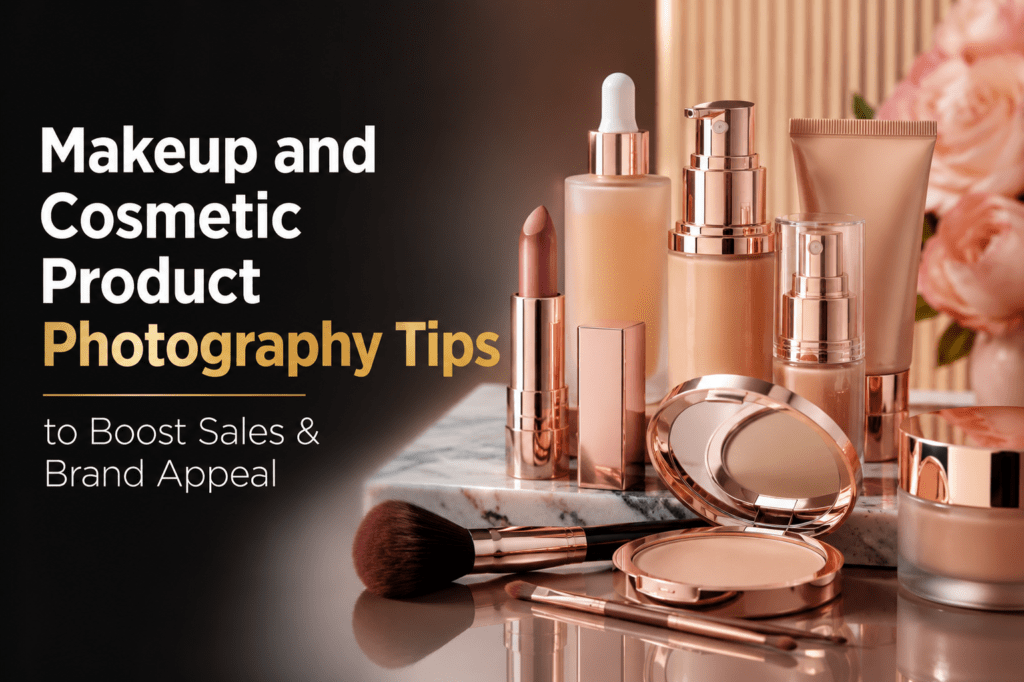
In the beauty industry, first impressions aren’t made in stores—they’re made on screens. Within seconds of landing on your website or scrolling past your ad, customers decide whether your product is worth their attention. And that decision is driven almost entirely by what they see.
Your visuals don’t just support your brand—they sell it. From the shine of a lipstick to the texture of a serum, high-quality cosmetic product photography brings your products to life, builds instant trust, and communicates quality without a single word.
For beauty brands, D2C founders, and e-commerce sellers, strong imagery is more than just aesthetics—it’s a powerful tool for increasing engagement, improving conversions, and standing out in a crowded market. Investing in the right photography strategy isn’t optional anymore—it’s essential for growth.
What is Cosmetic Product Photography?
Cosmetic product photography, also known as product photography for cosmetics, focuses on capturing makeup and beauty products in a way that highlights their texture, color, packaging, and overall appeal. This includes everything from lipsticks and foundations to skincare bottles and luxury cosmetic kits.
Unlike general product photography, makeup product photography requires attention to fine details like gloss, pigmentation, and finish. It’s about creating visuals that make customers feel the product before they even try it.
Read more: What Makes the Best Photographer in Jaipur? Key Qualities to Look For
Why High-Quality Beauty Photography Matters for Brands
Great visuals and strong beauty brand photography directly impact how customers perceive your brand. Here’s why investing in beauty product photography is crucial:
- Builds Trust: Clear, professional images improve brand credibility and sales performance, making your products look reliable and premium
- Improves Conversions: High-quality images can significantly boost conversion optimization and increase purchase decisions
- Enhances Branding: Consistent visuals strengthen your visual identity, creating a strong and recognizable brand presence
- Supports Marketing: Better images perform well across ads, social media, and e-commerce platforms
In a competitive market, your visuals can be the deciding factor between a sale and a scroll. Studies show that high-quality product images can increase conversion rates by up to 30–40%, making cosmetic product photography a critical factor in e-commerce success.
Key Tips for Makeup & Cosmetic Product Photography
1. Lighting Techniques
Lighting can make or break your product images.
- Use soft, diffused lighting to avoid harsh shadows
- Natural light works well for a clean, authentic look
- Studio lighting helps maintain consistency across shoots
Proper lighting enhances textures, especially in makeup product photography and skincare product photography, where shine, hydration, and texture details matter.
2. Background Selection
Your background should complement—not overpower—the product.
- Use minimal backgrounds for e-commerce listings
- Choose colors that match your brand identity
- Experiment with textured or lifestyle backgrounds for campaigns
A clean background keeps the focus on the product while enhancing visual appeal.
3. Product Styling
Styling adds personality to your visuals.
- Use props like brushes, flowers, or mirrors
- Showcase product usage (e.g., lipstick swatches)
- Maintain brand consistency in styling
Well-executed styling elevates your beauty product photography and makes it more engaging.
4. Color Accuracy
In cosmetics, color is everything.
- Ensure true-to-life color representation
- Avoid over-editing or heavy filters
- Use calibrated screens and proper lighting
Accurate colors build trust and reduce product returns.
5. Composition & Angles
The way you frame your product matters.
- Use multiple angles (front, side, top)
- Highlight key features like packaging or texture
- Apply simple composition rules like the rule of thirds
Good composition enhances visual storytelling and makes your product stand out.
Read more: Why Jewellery Photography is Important for Bangles Brands
How to Plan an E-commerce Beauty Photoshoot
A successful e-commerce beauty photoshoot starts with proper planning. Without a clear strategy, even high-quality images can fail to deliver consistent results.
Here’s how to plan effectively:
- Define your goal: Product listing, social media, or ad campaigns
- Create a shot list: Include angles, close-ups, and lifestyle shots
- Choose a consistent theme: Align colors, backgrounds, and styling with your brand
- Prepare products: Clean, polish, and ensure perfect packaging
- Set up lighting and equipment: Maintain consistency across all shots
Planning ensures your e-commerce beauty photoshoot stays efficient, consistent, and aligned with your brand identity.
Ecommerce Beauty Photoshoot Best Practices
When it comes to selling beauty products online, consistency isn’t just important—it’s essential. A well-executed e-commerce beauty photoshoot ensures your entire product catalog looks clean, professional, and trustworthy, which directly impacts buying decisions.
Here are some best practices every brand should follow:
- Use a uniform background: Keep backgrounds consistent across all product images to create a clean and cohesive storefront
- Maintain consistent lighting and angles: This helps customers compare products easily and builds a polished brand identity
- Include close-ups and detail shots: Highlight textures, finishes, and packaging details to give customers a better understanding of the product
- Optimize images for web performance: Ensure fast loading without compromising on quality to improve user experience and SEO
A well-planned e-commerce beauty photoshoot not only enhances visual appeal but also builds trust, improves navigation, and increases conversions across your online store.
Common Mistakes to Avoid in Beauty Product Photography
In the beauty space, even the smallest visual flaw can impact how customers perceive your brand. Poor-quality images don’t just look unprofessional—they can reduce trust and hurt conversions.
Here are some common mistakes to watch out for:
- Poor lighting: Bad lighting can hide product details, textures, and true colors, making your product less appealing
- Inconsistent backgrounds: Different backgrounds across listings create a cluttered and unprofessional look
- Over-editing images: Excessive retouching can distort colors and mislead customers, leading to dissatisfaction
- Ignoring product cleanliness: Dust, smudges, or fingerprints can instantly downgrade the perceived quality of your product
- Using low-resolution images: Blurry or pixelated visuals reduce credibility and make your brand look less reliable
Avoiding these mistakes helps you maintain a clean, polished, and trustworthy brand image—something that’s crucial for standing out in the competitive beauty market.
Read more: Why Professional Product Photography Matters in 2026
Why Professional Cosmetic Photography Services Matter
While DIY shoots may work in the early stages, scaling a beauty brand requires more than just decent visuals—it demands consistency, quality, and a strong visual identity. That’s where professional cosmetics photography services truly make a difference.
Expert teams bring not only high-end equipment but also creative direction, product styling expertise, and a clear understanding of what drives conversions in cosmetic product photography. The result? Images that don’t just look visually appealing but actively influence buying decisions.
Working with professionals ensures the following:
- High-end, consistent visuals: Create a premium and cohesive look across your website, ads, and social media
- Faster production timelines: Efficient workflows help you launch products and campaigns without delays
- Stronger brand alignment: Every image reflects your brand’s tone, positioning, and target audience
- Optimized for performance: Images are designed to perform across e-commerce platforms, marketing campaigns, and digital channels
If you’re looking to elevate your brand presence and stand out in a competitive beauty market, investing in professional cosmetic product photography is a strategic move that delivers long-term value.
Conclusion
In the highly competitive beauty industry, visuals are no longer just an add-on—they are a core part of your brand strategy. From creating a strong first impression to influencing purchase decisions, every detail in cosmetic product photography plays a vital role in how your products are perceived.
By focusing on the right lighting, styling, composition, and consistency, brands can significantly improve their visual appeal and build stronger connections with their audience. More importantly, investing in high-quality imagery helps boost brand credibility, strengthen visual identity, and improve overall sales performance across e-commerce and marketing channels.
Whether you’re focusing on makeup or skincare product photography, investing in high-quality visuals is essential for long-term brand growth.
As your brand grows, partnering with professionals can take your visuals to the next level—ensuring your products not only stand out but also sell. If you’re ready to elevate your brand with high-impact visuals; explore professional cosmetic product photography services at LensClicker and hire a photographer to bring your products to life with expert precision.
Frequently Asked Questions
1. What is cosmetic product photography?
Cosmetic product photography is the process of capturing beauty and makeup products in a visually appealing way that highlights their textures, colors, packaging, and overall design. It helps brands present products professionally across websites, ads, and e-commerce platforms.
2. Why is cosmetic product photography important for brands?
It helps build trust, improves product presentation, strengthens brand identity, and increases conversion rates on e-commerce platforms. High-quality visuals also enhance customer engagement and improve overall marketing performance.
3. What is the difference between makeup product photography and general product photography?
Makeup product photography focuses specifically on beauty items like lipsticks, foundations, and skincare, highlighting details such as texture, pigmentation, and finish. General product photography is broader and less detail-oriented, focusing on overall product presentation.
4. What lighting works best for beauty product photography?
Soft, diffused lighting—either natural or studio—is ideal for highlighting product details and maintaining accurate colors. Proper lighting ensures textures, shine, and packaging are clearly visible in professional product photography.
5. How can I improve my e-commerce beauty photoshoot?
Maintain consistent backgrounds, use proper lighting, include multiple angles, and optimize images for fast loading and clarity. A well-planned e-commerce beauty photoshoot improves user experience and increases conversions.
6. Why is color accuracy important in cosmetic photography?
Accurate colors help customers make informed decisions and reduce returns caused by mismatched expectations. In cosmetic product photography, color precision is essential for building trust.
7. Can I do cosmetic product photography at home?
Yes, you can start with basic setups, but professional photography ensures better quality, consistency, and brand alignment. Many brands eventually switch to professional cosmetics photography services for better results and scalability.
8. What are common mistakes in beauty product photography?
Poor lighting, inconsistent backgrounds, over-editing, low-resolution images, and ignoring product cleanliness are common mistakes. Avoiding these helps maintain a professional and trustworthy brand image.
9. How do professional cosmetics photography services help e-commerce brands?
They provide high-quality, consistent visuals that enhance branding, improve customer trust, and increase conversions. Professional services ensure your beauty product photography performs well across websites, ads, and marketplaces.
10. How often should brands update their product images?
Brands should update images when launching new products, rebranding, or improving visual quality to stay competitive. Updated visuals help maintain relevance and improve engagement.
11. How much does cosmetic product photography cost?
The cost varies depending on the number of products, styling complexity, and creative requirements. Basic shoots may be budget-friendly, while premium e-commerce beauty photoshoots with advanced styling and concepts cost more. Investing in professional cosmetics photography services often delivers better long-term ROI through improved sales performance and brand positioning.
12. What equipment is needed for beauty product photography?
You need a good camera, macro lens, tripod, and proper lighting such as softboxes or ring lights. Additional tools like reflectors, diffusers, and editing software help achieve professional results in cosmetic product photography.
13. How long does a cosmetic product photoshoot take?
A cosmetic product photoshoot typically takes a few hours to several days depending on the number of products, styling complexity, and creative requirements. Simple e-commerce beauty photoshoots may be completed in one day, while advanced campaigns take longer for best results.