
Over 75% of online shoppers make purchase decisions based on product images alone—especially in the fashion industry. In a space where visuals drive attention, great clothing isn’t enough if it isn’t presented in a compelling way.
Today’s fashion brands must go beyond basic product images. The way your apparel is styled, captured, and presented directly impacts how customers perceive your brand and whether they choose to buy. Whether you’re launching a new collection, refreshing your online store, or promoting seasonal trends, creative visuals are what truly make your products stand out.
Professional fashion photography services do more than just capture clothing—they tell a story, express your brand identity, and create an emotional connection with your audience. A well-executed fashion shoot can transform simple garments into desirable, high-impact visuals that leave a lasting impression.
The global fashion e-commerce market continues to grow rapidly, with increasing demand for visually engaging product presentation. Insights from Statista’s official website highlight how strongly product imagery and user experience influence online apparel sales.
In this guide, we’ll explore practical and creative fashion photography ideas that clothing brands can use to enhance their visual presence, boost engagement, and drive higher conversions.
What is Fashion Photography?
Fashion photography is the art of capturing clothing and apparel in a visually appealing way to showcase style, fit, and brand identity. It is widely used for e-commerce websites, advertising campaigns, social media, and fashion catalogs.
Table of contents
- Why Fashion Photography Matters
- What Makes Great Fashion Photography?
- 15 Creative Fashion Photography Ideas for Clothing Brands
- 1. Minimalist Studio Photography
- 2. Lifestyle Fashion Photography
- 3. Monochrome Color Themes
- 4. Motion Photography
- 5. Seasonal Storytelling
- 6. Close-Up Detail Shots
- 7. Flat Lay Clothing Photography
- 8. Hanging Garment Photography
- 9. Reflection Photography
- 10. Dramatic Lighting
- 11. Urban Street Fashion
- 12. Nature-Inspired Fashion Shoots
- 13. Editorial Fashion Photography
- 14. Color Blocking
- 15. Creative Shadow Photography
- Studio vs Outdoor Fashion Photography
- Essential Equipment for Apparel Photography
- Step-by-Step Guide to Planning a Creative Fashion Shoot
- Ecommerce Fashion Photography Best Practices
- Benefits of Professional Fashion Photography Services
- Common Mistakes to Avoid
- Why Choose LensClicker for Fashion Photography Services?
- Conclusion
- Frequently Asked Questions
- 1. What are fashion photography services?
- 2. Why is apparel photography important?
- 3. What is e-commerce fashion photography?
- 4. How many photos should each clothing product have?
- 5. Should fashion photography include models?
- 6. What lighting is best for clothing product photography?
- 7. How can creative fashion shoots improve marketing?
- 8. What backgrounds work best for apparel photography?
- 9. What are common mistakes in fashion photography?
- 10. When should clothing brands hire professional photography services?
Why Fashion Photography Matters
Fashion photography plays a crucial role in how customers perceive and purchase clothing online. It helps shoppers clearly understand how a garment looks, fits, and feels—reducing uncertainty and increasing buying confidence. High-quality visuals not only capture attention but also build trust, improve engagement, and directly impact sales.
Studies show that compelling product imagery significantly influences online buying decisions, especially in fashion e-commerce. According to Shopify’s official website, product images are one of the most important factors in improving conversions and establishing customer trust.
Professional fashion photography services help clothing brands:
- Build trust with potential customers
- Showcase fabric texture and quality
- Highlight garment fit and structure
- Create a strong and recognizable brand identity
- Improve engagement across websites and social media
- Increase conversion rates and sales
In addition, well-executed visuals make your website, catalogs, and marketing campaigns look polished, consistent, and professional—helping your brand stand out in a highly competitive market.
Read more: How Professional Product Photography Improves Online Sales
What Makes Great Fashion Photography?
Successful fashion photography combines creativity with consistency.
The best fashion images include:
- Balanced lighting
- Professional styling
- Clean composition
- Natural model poses
- Sharp focus
- Accurate product colors
- Consistent editing
Every image should communicate the personality of your clothing brand while helping customers understand the product.
15 Creative Fashion Photography Ideas for Clothing Brands
Creating visually appealing and engaging images is essential for standing out in today’s competitive fashion market. These creative ideas can help brands elevate their apparel photography and make a lasting impression.
1. Minimalist Studio Photography
A clean and distraction-free background ensures full focus on the clothing. This style is widely used in ecommerce fashion photography for its clarity and consistency.
Best for: product catalogs, ecommerce websites, marketplace listings
2. Lifestyle Fashion Photography
Move beyond plain backdrops by placing models in real-life environments. This approach makes outfits more relatable and helps customers visualize themselves wearing the clothing.
Examples: coffee shops, streets, parks, homes, office settings
3. Monochrome Color Themes
Using a single color palette for both background and styling creates a sophisticated and premium look. This technique enhances brand aesthetics without overpowering the outfit.
4. Motion Photography
Adding movement brings life and energy to your visuals. It makes the clothing feel more dynamic and natural.
Ideas: walking, twirling, jumping, wind-blown fabrics, flowing dresses
5. Seasonal Storytelling
Design your shoots around specific seasons or occasions to make campaigns more relevant and emotionally engaging.
Themes: summer vacations, winter fashion, festive collections, weddings, holidays
6. Close-Up Detail Shots
Detailed shots allow customers to examine the craftsmanship and quality of garments. These are essential for clothing product photography.
Focus on: fabric texture, stitching, buttons, embroidery, prints, zippers
7. Flat Lay Clothing Photography
Flat lays are clean, organized, and highly effective for showcasing outfits without models. They work well for social media and product listings.
Best for: T-shirts, jeans, accessories, coordinated outfits
8. Hanging Garment Photography
Presenting clothes on premium hangers creates a boutique-style aesthetic. It’s simple yet elegant and ideal for modern brand presentation.
Best for: lookbooks, new arrivals, website banners
9. Reflection Photography
Using reflective surfaces such as acrylic sheets adds a luxurious and high-end feel to your images. This technique works especially well for premium collections.
10. Dramatic Lighting
Lighting can dramatically change the mood of your shoot. Experimenting with shadows and highlights adds depth and visual interest.
Try: side lighting, rim lighting, soft shadows, spotlight effects
11. Urban Street Fashion
City environments provide a trendy and modern backdrop for fashion shoots. Elements like textured walls, staircases, and urban architecture enhance the visual appeal.
12. Nature-Inspired Fashion Shoots
Outdoor locations create a beautiful contrast with clothing and add a refreshing, organic feel to visuals.
Locations: gardens, beaches, mountains, forest trails, open fields
13. Editorial Fashion Photography
Editorial shoots focus on storytelling through styling, expressions, and locations. This approach is ideal for campaigns, magazines, and branding projects.
14. Color Blocking
Using bold, contrasting background colors makes the clothing stand out instantly. This style is eye-catching and highly effective for marketing visuals.
15. Creative Shadow Photography
Natural shadows from windows, plants, or architectural elements can add depth and artistic appeal. This technique enhances visuals without distracting from the product.
These creative approaches, when combined with professional fashion photography services, can transform simple clothing into compelling visual stories that attract, engage, and convert customers.
Studio vs Outdoor Fashion Photography
What is studio fashion photography?
Studio photography uses controlled lighting and neutral setups to create clean, consistent product images—ideal for ecommerce and catalogs.
What is outdoor fashion photography?
Outdoor photography uses natural light and real-world environments to create dynamic, lifestyle-driven visuals—perfect for campaigns and storytelling.
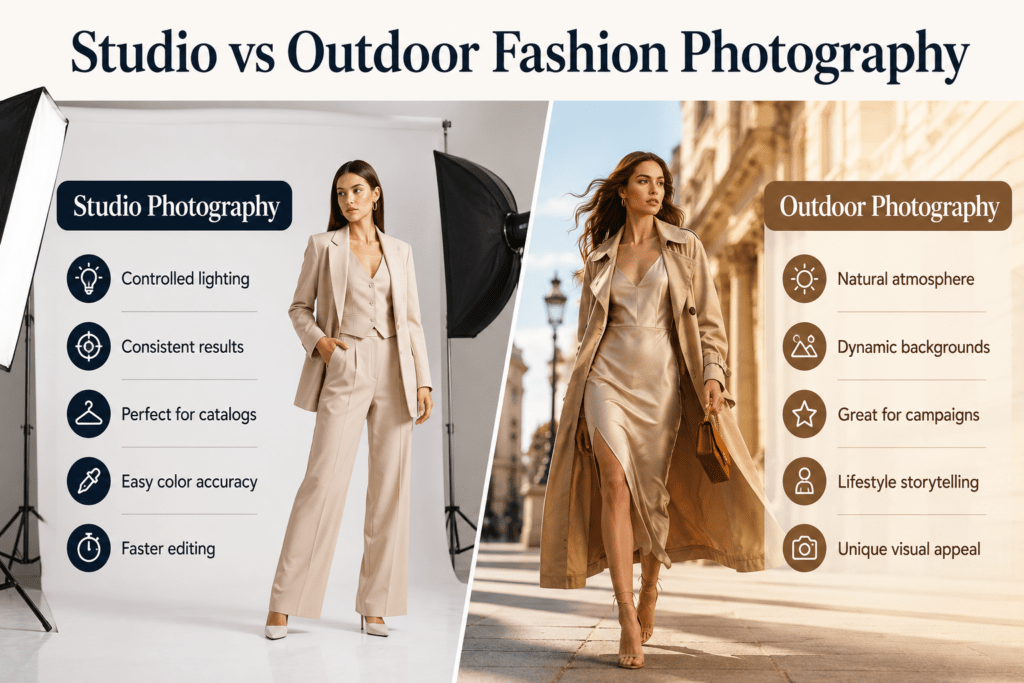
Key Differences:
| Studio Photography | Outdoor Photography |
| Controlled lighting | Natural atmosphere |
| Consistent results | Dynamic backgrounds |
| Perfect for catalogs | Great for campaigns |
| Easy color accuracy | Lifestyle storytelling |
| Faster editing | Unique visual appeal |
Many clothing brands use a combination of both styles.
Read more: Studio vs Outdoor Photoshoot: Which Is Better for Your Brand?
Essential Equipment for Apparel Photography
High-quality equipment plays a vital role in achieving professional and consistent results in apparel photography. The right tools not only improve image clarity but also ensure accurate colors, proper lighting, and sharp details—key factors in building trust and driving conversions.
Recommended Equipment:
- Mirrorless or DSLR Camera – Delivers high-resolution images with better control over exposure and focus
- 50mm or 85mm Lens—Ideal for capturing natural proportions and sharp garment details
- Softbox Lighting – Provides soft, even lighting to eliminate harsh shadows and highlight textures
- Reflectors – Helps balance light and reduce unwanted shadows for a clean, polished look
- Tripod – Ensures stability and consistency across multiple shots and product angles
- Neutral Backdrops – Keeps the focus on the clothing and maintains a professional aesthetic
- Color Calibration Tools – Ensures accurate color representation, which is crucial for e-commerce fashion photography
Investing in the right equipment supports consistency across your product collections and enhances the overall quality of your visuals. Combined with professional fashion photography services, these tools help create images that not only look great but also convert viewers into customers.
How Many Images Should a Clothing Product Have?
A clothing product should ideally have 5–7 images, including front, back, side views, close-up details, and lifestyle shots. This gives customers a complete understanding of the product.
Step-by-Step Guide to Planning a Creative Fashion Shoot
A well-planned shoot is the foundation of successful fashion photography services. From concept to execution, every step plays a role in creating visuals that attract attention and drive conversions.
Step 1: Define Your Goal
Start by identifying the purpose of your shoot. This will guide your entire creative direction.
Common goals include:
- Ecommerce product listings
- Social media content
- Advertising campaigns
- Product catalogs
- Seasonal or festive collections
Step 2: Build a Mood Board
A mood board helps visualize your concept and keeps the entire team aligned.
Include elements like:
- Color palettes
- Model poses
- Lighting styles
- Background ideas
- Styling references
Step 3: Select the Right Location
Choose a location that enhances your clothing without distracting from it. Whether it’s a studio or outdoor setting, the background should complement your brand’s style and story.
Step 4: Plan Styling
Attention to detail in styling can make or break your shoot.
Ensure every outfit is:
- Clean and wrinkle-free
- Properly fitted on the model
- Coordinated with accessories and footwear
Step 5: Capture Multiple Angles
Providing different perspectives helps customers better understand the product.
Capture:
- Front, side, and back views
- Close-up detail shots
- Full-body images
- Lifestyle shots
This approach is essential for effective ecommerce fashion photography, as it reduces uncertainty and improves buying confidence.
Step 6: Edit Carefully
Post-production should enhance your images while keeping them realistic. Focus on:
- Accurate color correction
- Balanced brightness and contrast
- Natural skin tones and fabric textures
Consistent editing ensures a polished and professional look across your entire collection, strengthening your brand identity.
Read more: Checklist Before Hiring a Product Photographer in Jaipur
Ecommerce Fashion Photography Best Practices
What is Ecommerce Fashion Photography?
Ecommerce fashion photography focuses on creating clean, consistent, and high-quality product images for online stores. It ensures accurate color representation, clear garment details, and multiple viewing angles to help customers make confident buying decisions.
For e-commerce fashion photography, consistency is essential.
Follow these practices:
- Use uniform lighting across all products.
- Keep backgrounds clean and distraction-free.
- Maintain consistent image dimensions.
- Show multiple views of each garment.
- Include close-up detail shots.
- Optimize images for fast website loading.
- Ensure colors accurately represent the product.
These practices help customers shop with confidence.
Benefits of Professional Fashion Photography Services
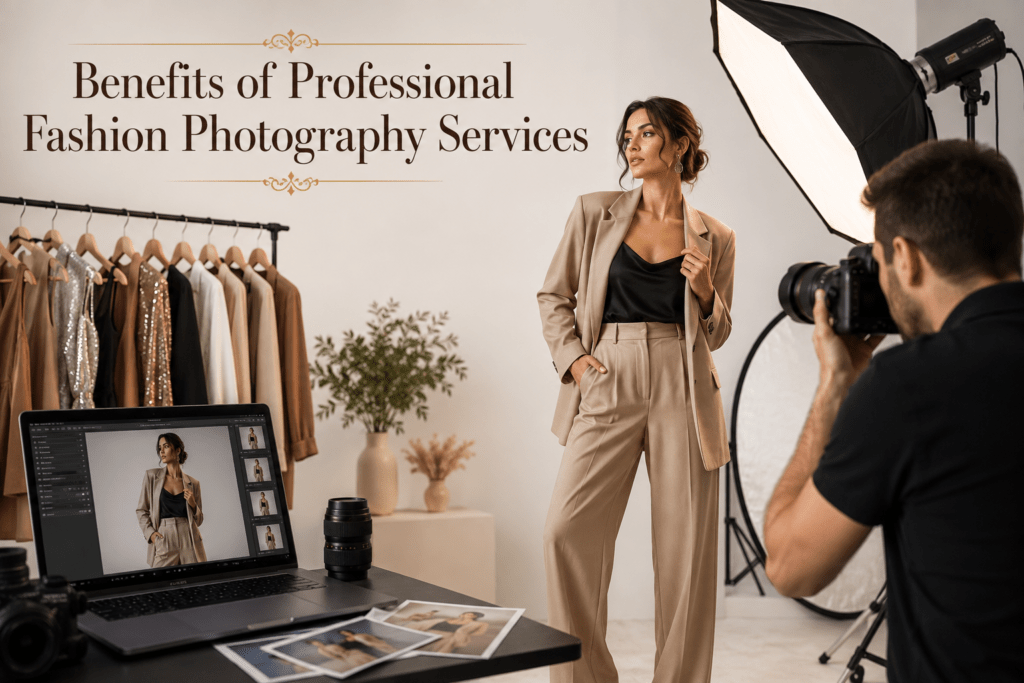
Investing in professional fashion photography services delivers long-term value by enhancing how your brand is perceived and how effectively your products sell online. High-quality visuals are not just aesthetic—they directly impact customer trust, engagement, and conversions.
1. Improved Brand Identity
Consistent, high-quality images create a strong and recognizable visual identity. This helps your brand stand out and build a lasting impression across all platforms.
2. Better Customer Trust
Clear, detailed visuals allow customers to confidently evaluate your products. When shoppers can see accurate colors, textures, and fit, they are more likely to trust your brand.
3. Higher Conversion Rates
Professional photography makes your products more appealing, encouraging customers to take action and complete their purchases. Strong visuals can significantly improve sales performance.
4. Lower Return Rates
Accurate and realistic images reduce confusion about product details such as color, size, and design, leading to fewer returns and better customer satisfaction.
5. Stronger Marketing Performance
High-quality visuals can be repurposed across multiple channels, including websites, social media, email campaigns, advertisements, and catalogs—maximizing your marketing impact.
By combining creativity with consistency, professional photography ensures your clothing not only looks great but also performs effectively in a competitive ecommerce environment.
Common Mistakes to Avoid
Even small mistakes in fashion photography can reduce the impact of your visuals and affect customer trust. Avoiding these common issues ensures your images look professional, consistent, and conversion-ready.
Key Mistakes to Avoid:
- Poor Lighting: Inadequate or harsh lighting can distort colors and hide important garment details. Always use soft, balanced lighting for clear and accurate results.
- Wrinkled or Unprepared Clothing: Creased or poorly styled outfits create a negative impression and make products look low quality.
- Distracting Backgrounds: Busy or cluttered backgrounds take attention away from the clothing and confuse the viewer.
- Over-Editing: Excessive retouching can make images look unnatural and misrepresent the actual product.
- Incorrect Color Balance: Inaccurate colors can lead to customer dissatisfaction and higher return rates.
- Low-Resolution Images: Blurry or pixelated images reduce credibility and fail to showcase product quality.
- Inconsistent Image Sizes: Lack of uniformity across product images creates a poor user experience on websites and marketplaces.
- Missing Close-Up Shots: Not showing details like fabric texture or stitching can leave customers uncertain about quality.
- Unnatural Model Poses: Awkward or forced poses make clothing look less appealing and unrealistic.
- Cluttered Composition: Too many elements in the frame distract from the product and weaken visual impact.
Paying close attention to these details helps maintain a professional standard in apparel photography, resulting in stronger visuals, better engagement, and improved conversions.
Read more: How to Plan a Successful Ecommerce Photoshoot for Your Brand
Why Choose LensClicker for Fashion Photography Services?
LensClicker is a fashion photography service focused on creating simple, high-quality visuals that help clothing brands present their products clearly.
At LensClicker, the approach is straightforward—capture your clothing in a way that feels natural, consistent, and aligned with your brand.
What You Can Expect
- Clean, professional images for e-commerce
- Studio and lifestyle shoot options
- Accurate colors and fabric details
- Consistent visual style across platforms
With the right visuals, customers can better understand your products and feel more confident making a purchase.
Conclusion
Creative fashion photography is more than taking attractive pictures—it’s about presenting clothing in a way that inspires confidence and encourages customers to explore your collection. Whether you’re photographing garments for an e-commerce store, launching a seasonal campaign, or building a lookbook, thoughtful planning and consistent execution make a lasting impact. If you plan to hire a photographer, choosing the right creative approach can make all the difference.
By combining clean clothing product photography with imaginative concepts and lifestyle storytelling, clothing brands can create memorable visuals that resonate with their audience.
If you’re looking for professional fashion photography services, LensClicker offers tailored photography solutions designed to showcase apparel with creativity, precision, and consistency for e-commerce stores, catalogs, and marketing campaigns.
Frequently Asked Questions
1. What are fashion photography services?
Fashion photography services involve professionally capturing clothing and apparel for e-commerce stores, catalogs, advertising campaigns, and brand promotions.
2. Why is apparel photography important?
Apparel photography helps customers clearly see fabric, fit, and design details, making them more confident when purchasing clothing online.
3. What is e-commerce fashion photography?
Ecommerce fashion photography focuses on clean, consistent product images that present clothing clearly and accurately for online stores.
4. How many photos should each clothing product have?
Each product should ideally include front, back, side, close-up detail, and lifestyle images to give shoppers a complete view.
5. Should fashion photography include models?
Yes. Model photography shows how garments fit and move, while flat-lay and ghost mannequin shots are also useful for product listings.
6. What lighting is best for clothing product photography?
Soft, even lighting works best, as it highlights true colors, textures, and garment details without creating harsh shadows.
7. How can creative fashion shoots improve marketing?
Creative shoots tell a visual story, boost social media engagement, and make campaigns more memorable and impactful.
8. What backgrounds work best for apparel photography?
White backgrounds are ideal for e-commerce, while lifestyle or textured backgrounds are better for branding and promotional content.
9. What are common mistakes in fashion photography?
Common mistakes include poor lighting, wrinkled clothing, inaccurate colors, cluttered backgrounds, over-editing, and low-resolution images.
10. When should clothing brands hire professional photography services?
Brands should invest in professional photography when launching collections, updating e-commerce stores, or creating marketing campaigns that require consistent, high-quality visuals.